
What Skipping This Costs You
Put this off again and you're betting against a door that just spent months absorbing moisture, swelling in its frame, and fighting salt-laden air off the lakes. That bet usually loses in January, not July. The classic failure pattern in Lake County is a spring that rusted quietly all summer, then snaps on the first cold, dry morning when the metal contracts and loses what little flex it had left. Or a sensor that's been slightly misaligned since a storm jostled the bracket in September, and now it's cold enough that the door won't close reliably at all. None of this is dramatic until it is — usually right when you need the door to open for an early morning drive or close tight before a cold snap rolls through.
Why Fall-to-Winter Is the Real Stress Test
Umatilla doesn't get brutal winters, but it does get real temperature swings — warm, humid days followed by nights that drop into the 30s and 40s, sometimes for several nights in a row. That swing matters more than people expect. A garage door and its hardware spend the hot season swelling: wood panels absorb humidity, steel tracks pick up condensation, springs pick up surface rust from months of damp air. When the dry, cooler air of late fall finally arrives, everything contracts. Gaps that were sealed tight in August open up. Metal that was flexing under humidity gets brittle and stiff. This is exactly the transition that turns a hidden problem into a sudden one.
Springs and Cables: Check for Rust, Not Just Noise
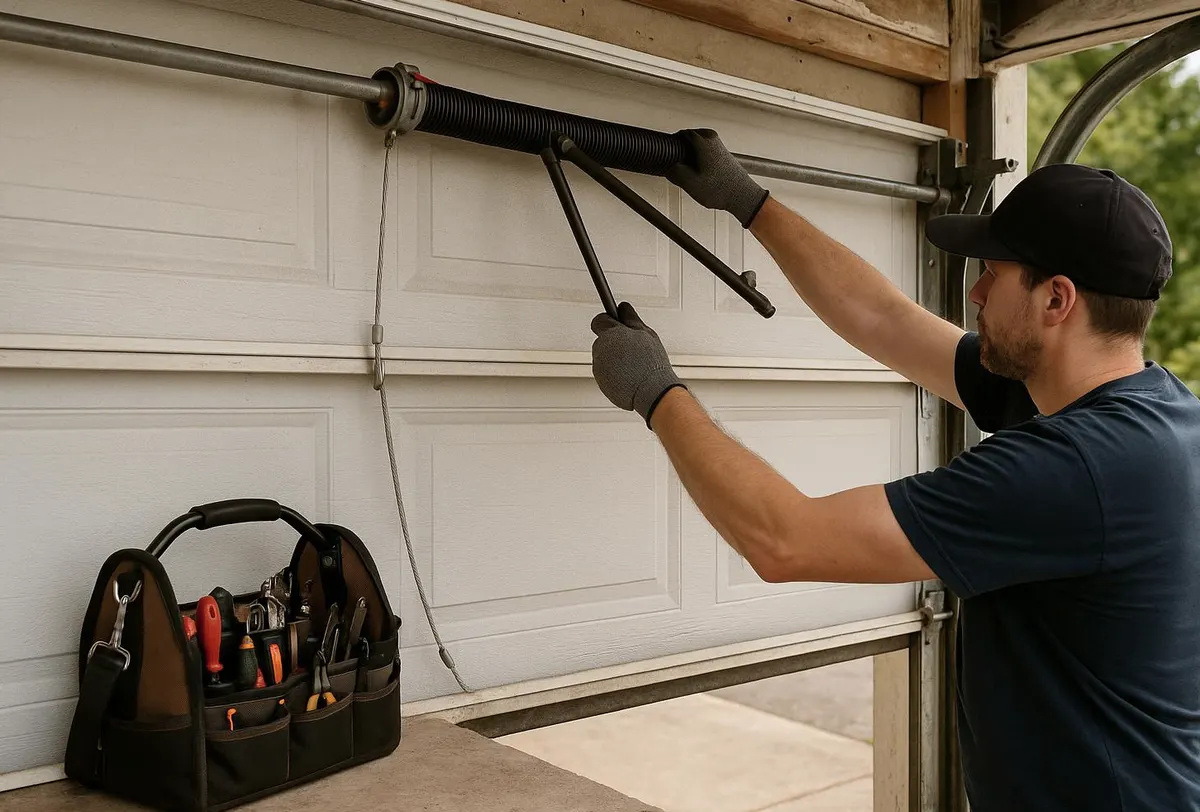
Torsion springs typically last several years, but a summer of humidity followed by a dry snap accelerates wear on any spring that already had surface rust. Look at the coils themselves — flaking rust, pitting, or a spring that looks thinner in spots than the rest of its length are signs it's past due. Cables should be checked where they wrap around the bottom bracket; fraying there is common after a storm season's worth of door cycling. Springs and cables are under serious tension and are not a DIY repair — if you see wear, this is a call-a-professional item, not a weekend project.
Weatherstripping and Bottom Seal
The rubber seal along the bottom of the door and the weatherstripping around the frame take a beating from both UV exposure and the swelling-and-shrinking cycle. By late fall, check for cracking, gaps, or sections that have pulled away from the track. A failed seal doesn't just let in cold air on the rare chilly night — it's also your main defense against wind-driven rain during the tail end of storm season and against pests looking for a warmer spot as temperatures drop. Replacing a worn seal is inexpensive and takes less than an hour.
Tracks, Rollers, and Hardware
Months of humidity followed by drier air can leave tracks slightly out of alignment, especially if the door took any wind load during storm season. Run a flashlight along both tracks looking for rust, debris buildup, or gaps where the rollers sit loose. Rollers themselves — especially older nylon or steel ones — should move smoothly without grinding or catching. This is also the right time for a full lubrication pass: springs, hinges, rollers, and the track itself benefit from a silicone-based lubricant (avoid WD-40 as a long-term lubricant; it displaces moisture short-term but doesn't hold up). Rust that's already set into hinges or hardware brackets is a sign that moisture got in during the wet months and should be addressed before it spreads.
Opener and Sensor Function
Garage door openers work harder than people realize during storm season — power flickers, humidity affecting circuit boards, and sensors getting knocked out of alignment by wind or debris. Before winter settles in, test the auto-reverse safety feature by placing a block in the door's path and confirming it reverses on contact. Check that both photo-eye sensors are aligned and their lenses are clean; a thin film of humidity-driven grime is common this time of year and can cause intermittent failures that look random but aren't. If you have battery backup on your opener, now's a good time to test it — useful both for a stray fall storm and for any winter power interruption.
Insulation and Panel Condition
If your garage houses anything temperature-sensitive — paint, electronics, a freezer, or simply a room you don't want turning into a cold box on the rare 30-degree night — check panel seams for daylight gaps and consider whether added weatherstripping or a door-bottom threshold seal would help. Wood or composite doors that swelled during the humid months should be inspected for any panel separation or warping now that they're drying out and settling back into shape.
When to Call Precision Garage Door of Umatilla
If you're seeing rust on springs or cables, hearing new grinding or popping sounds, or your door is sticking partway through its cycle, don't wait for a cold morning to find out it's worse than it looked. Our Garage Door Tune-Up & Maintenance service covers a full inspection of springs, cables, tracks, rollers, and opener function, catching exactly the kind of wear that builds up over a humid Florida summer. And if a spring is already showing serious rust or wear, our Garage Door Spring Repair technicians can replace it safely and get your door back to a full, even cycle before winter weather tests it.
Serving Umatilla, Eustis, Mount Dora, Tavares, Leesburg, Lady Lake, Altoona, and Apopka, Precision Garage Door of Umatilla is ready to help you get ahead of the season. Call us today to schedule your winter tune-up before the first cold snap finds the weak spot for you.