
The Short Answer
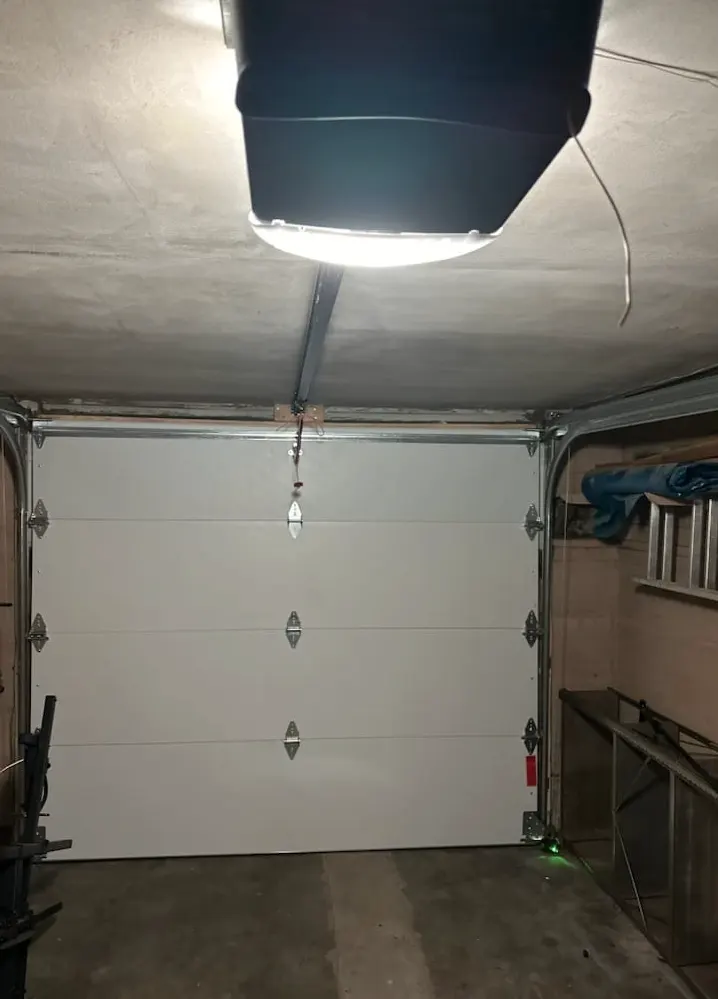
Travel limits tell the opener where the door should stop (fully open, fully closed). Force settings tell the opener how hard to push or pull to get there. If your door reverses before it touches the floor, or slams down harder than it used to, one of these two settings is off — not the whole opener, not the springs, not "just how it is now." Whoever in the house says "something changed with the door" is right. The question is which setting changed, and that's worth figuring out before anyone adjusts it blind.
What Travel Limits Actually Do
Every chain-drive or belt-drive opener has a motor that runs for a set distance, then stops. Travel limits are the stored measurements that tell it: stop here when going up, stop here when going down. They're set once during installation and shouldn't need to change — but they drift or get bumped when:
- The door has been serviced and the opener arm was reattached slightly differently
- A power surge or outage reset the opener's memory
- Someone pressed the wrong button on the motor unit while changing a lightbulb
- The track or rollers have shifted slightly, changing how far the door physically travels
When the down-limit is set too short, the door stops a few inches above the floor and looks like it's not sealing — which in Florida means wasted cooling and a gap for driving rain to blow through during an afternoon storm. When the down-limit is set too long, the opener keeps pushing after the door is already closed, which strains the opener motor and can bend the bottom panel over time.
What Force Does — And Why It's the Dangerous One
Force is how much resistance the opener will push through before it decides something is blocking the door and reverses. It exists for one reason: safety. If a force setting is too high, the opener will shove through an obstruction — a bike, a pet, a kid's foot — instead of stopping. That's the setting federal safety standards care about, and it's also the one people crank up as a lazy fix for a door that's "struggling."
Here's the problem with that shortcut: a door that struggles to open or close usually has a mechanical reason — unbalanced springs, a bent track, rollers that have swollen or rusted in our humidity, or cables fraying under tension. Raising the force setting doesn't fix any of that. It just lets the opener fight through resistance that shouldn't be there in the first place, which:
- Accelerates wear on the opener's gears and drive mechanism
- Masks a spring problem until the door drops suddenly when the opener finally gives out
- Reduces the safety margin that's supposed to stop the door on a hand, foot, or pet
Why This Comes Up More Often in Umatilla
Lake County's climate works against these settings in a few specific ways. Humidity swells wood and composite door panels during the wet months, adding resistance the opener didn't account for when it was first set up. Heat makes steel tracks expand slightly during the day and contract at night, which can shift how smoothly rollers travel through them. Salt-tinged air drifting inland from the coast speeds up rust on tracks and hinges, adding friction that the opener has to push through. And afternoon storm season brings power blips that are enough to reset an opener's stored limits without anyone noticing until the door starts behaving oddly.
None of that means you need to touch the force dial every month. It means that if your door's behavior changed after a storm, after a repair, or gradually over a humid summer, the fix is almost never "just turn up the force." It's figuring out why the door needs more force than it used to.
How to Check Without Guessing
- Watch the door close on a flat test object (a 2x4 laid flat works) — it should reverse immediately on contact. If it pushes through or barely slows down, force is set too high.
- Watch the door close all the way — it should stop flush with the floor, not bounce back up or keep straining after it's down. That's a travel limit issue.
- Lift the door halfway by hand with the opener disconnected. It should stay roughly in place. If it crashes down or flies up, the springs are unbalanced — and no amount of force or limit adjustment fixes a spring problem.
That last test is the real tiebreaker in most arguments. If the door isn't balanced, force and travel settings are compensating for a mechanical fault, and someone's going to be right that "the door is getting worse" even if the opener settings look fine on paper.
When to Call Precision Garage Door of Umatilla
If force or travel limits keep drifting, if the door reverses unpredictably, or if you've found an imbalance during the hand-lift test, it's time for a professional look rather than more dial-turning. Our Garage Door Tune-Up & Maintenance service checks spring balance, roller condition, and track alignment before we touch opener settings — because adjusting force to compensate for a mechanical problem just delays a bigger repair. If the door has already come off track or the opener is grinding against real resistance, our Off Track Door Repair technicians can diagnose whether it's a limit issue, a force issue, or something structural.
If your garage door in Umatilla, Eustis, Mount Dora, Tavares, Leesburg, Lady Lake, Altoona, or Apopka has been acting up, settle the argument for good — call Precision Garage Door of Umatilla and let a technician tell you which setting, or which part, is actually the problem.